

Our research
Intrinsically disordered proteins (IDPs) are key regulators of complex biological functions and cellular organization. Rather than adopting stable three-dimensional structures, they exist as heterogeneous conformational ensembles that mediate transient interactions, short linear motif–based recognition, and biomolecular condensation. These properties enable the dynamic organization of molecular networks and cellular systems, while their dysregulation contributes to cancer, neurodevelopmental disorders, neurodegeneration, and many other human diseases.
Despite major advances in characterizing IDPs at the molecular level, how their properties translate into cellular organization and function remains poorly understood. Our research addresses this challenge by integrating computational biology, machine learning, biochemistry, and cell biology to identify functional elements within intrinsically disordered regions (IDRs), characterize their interaction networks, and uncover the molecular principles that connect protein disorder to cellular function.
Our research focuses on three complementary directions:
Protein disorder in cellular organization
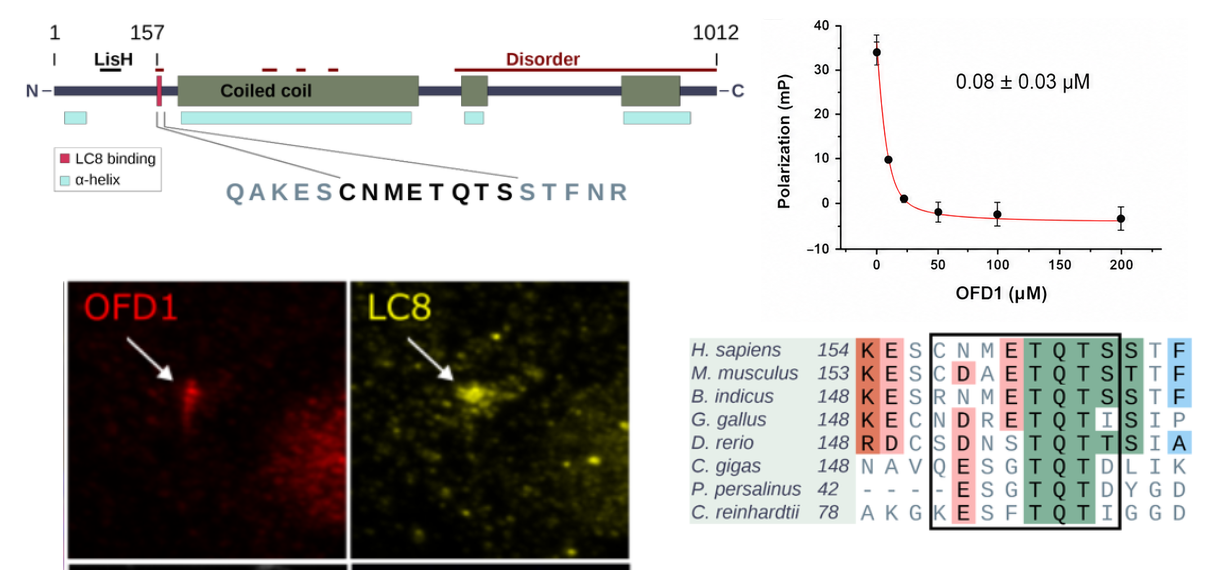
We investigate how intrinsically disordered proteins organize dynamic cellular systems through transient interactions, short linear motifs, multivalent binding, and biomolecular condensation. Using the centrosome–primary cilium system as a model, we study how these mechanisms regulate cellular architecture, signaling, and dynamic interaction networks.
Computational methods and resources
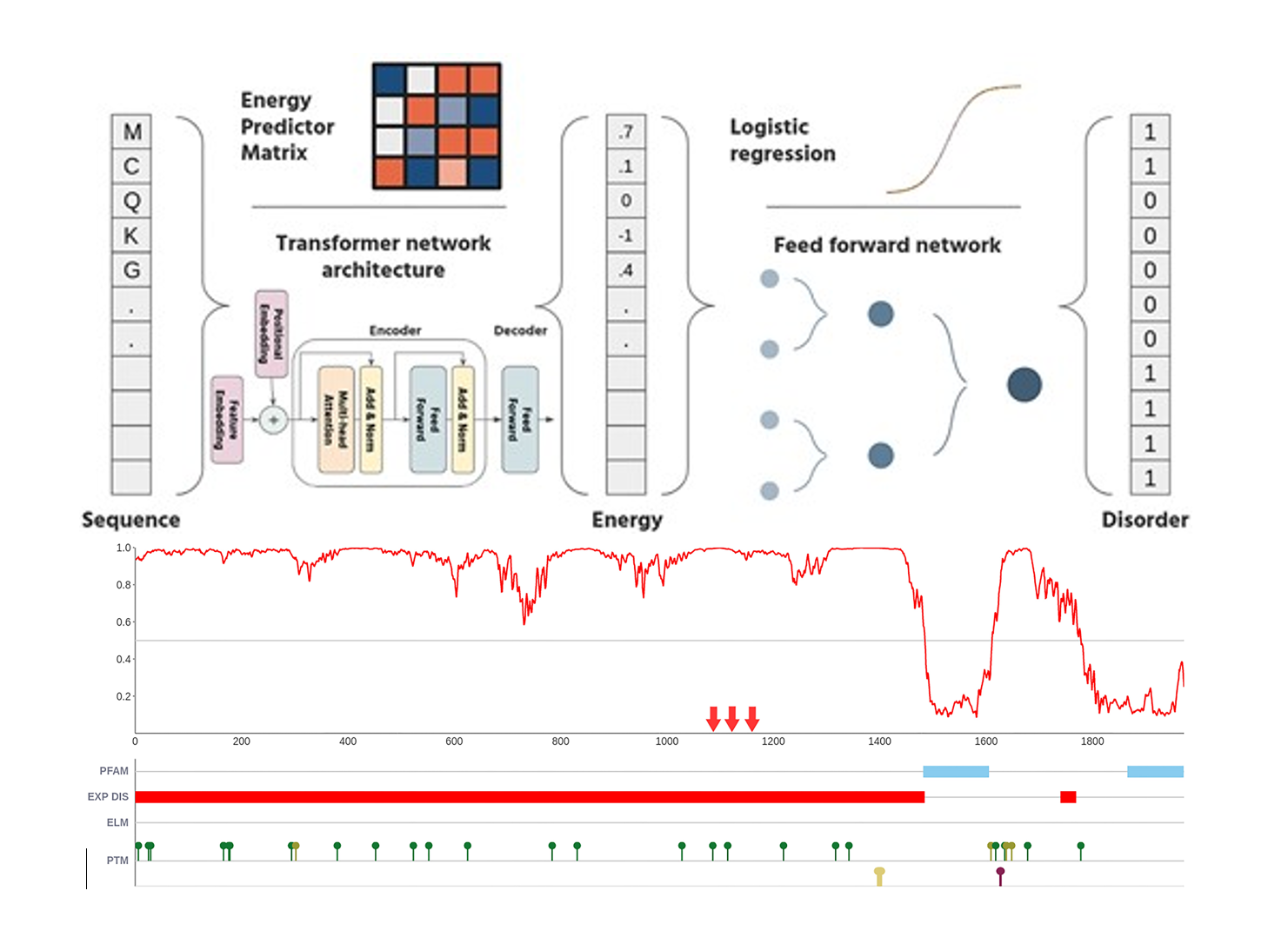
Predicting the molecular properties and functions of intrinsically disordered proteins remains a major challenge in molecular biology. We develop computational methods, machine-learning approaches, and publicly available software to decipher the sequence determinants of intrinsically disordered protein function. Our tools, including IUPred and ANCHOR, AIUPred, and DisCanVis, are widely used to predict protein disorder and disordered binding regions and interpret disease-associated genetic variants.
Protein disorder in human disease
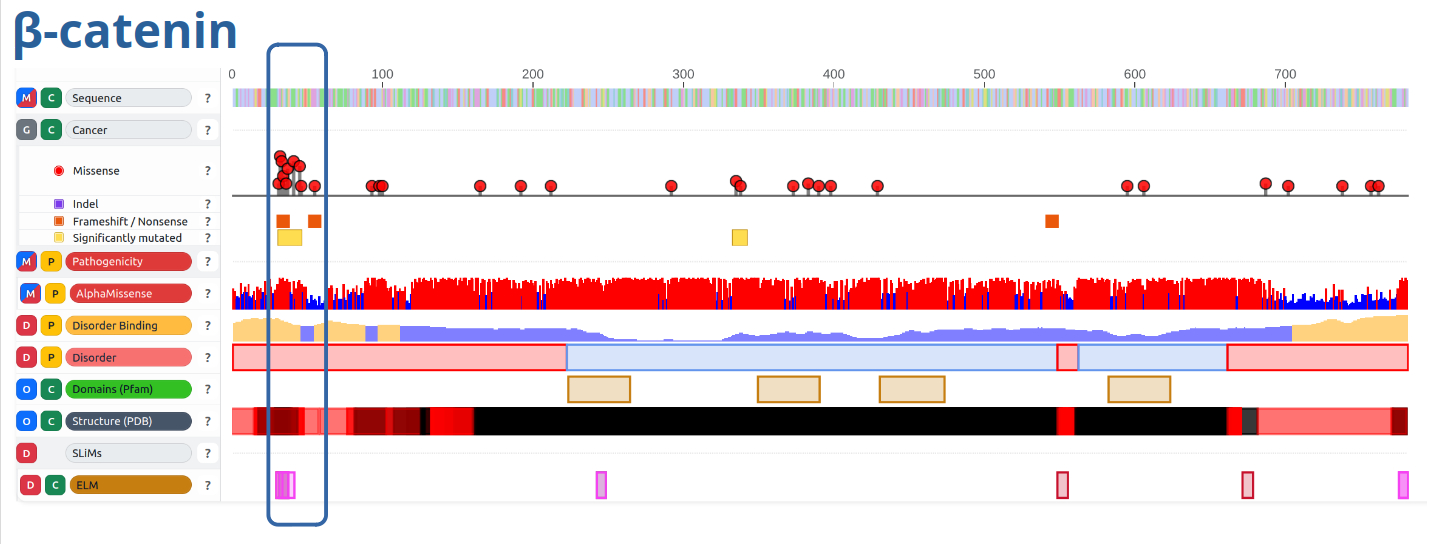
Many disease-associated mutations occur within intrinsically disordered regions, where their molecular consequences are often difficult to interpret. We integrate computational predictions with biochemical and cellular experiments to identify the affected functional elements, determine how mutations alter protein interactions and cellular networks, and uncover the molecular mechanisms underlying human disease.
Ultimately, our goal is to establish predictive frameworks that bridge biological scales, connecting protein sequence and molecular interactions to cellular systems and diseases.
More
Fundings

Publications
2026
- Pathogenic variations illuminate functional constraints in intrinsically disordered proteins. Deutsch N, Erdős G, Dosztányi Z. iScience. 2026 Mar 4;29(4):115215.
- Toward a unified framework for determining conformational ensembles of disordered proteins. Ghafouri H, Kadeřávek P, Melo AM, Aspromonte MC, Bernadó P, Cortés J, Dosztányi Z, Erdős G, Feig M, Janson G, Lindorff-Larsen K, Mulder FAA, Nagy P, Pestell R, Piovesan D, Schiavina M, Schuler B, Sibille N, Tesei G, Tompa P, Vendruscolo M, Vondrasek J, Vranken W, Zidek L, Tosatto SCE, Monzon AM. Nat Methods. 2026 Apr;23(4):705-719.
- DisProt in 2026: enhancing intrinsically disordered proteins accessibility, deposition, and annotation. Nugnes MV, Bouhraoua KEA, Zoubiri M, Pancsa R, Fichó E; DisProt Consortium; Tompa P, Piovesan D, Tosatto SCE, Aspromonte MC. Nucleic Acids Res. 2026 Jan 6;54(D1):D383-D392.
2025
- The non-catalytic DNA polymerase ε subunit is an NPF motif recognition protein.Keskitalo S, Zambo B, Malaymar Pinar D, Tuhkala A, Salokas K, Turunen T, Deutsch N, Davey N, Dosztányi Z, Varjosalo M, Gogl G. Nat Commun. 2025 Dec 13;17(1):586.
- AIUPred – Binding: Energy Embedding to Identify Disordered Binding Regions. Erdős G, Deutsch N, Dosztányi Z. J Mol Biol. 2025 Aug 1;437(15):169071.
2024
- Deep learning for intrinsically disordered proteins: From improved predictions to deciphering conformational ensembles. Erdős G, Dosztányi Z. Curr Opin Struct Biol. 2024 Dec;89:102950.
- ViralPrimer: a web server to monitor viral nucleic acid amplification tests’ primer efficiency during pandemics, with emphasis on SARS-CoV-2 and Mpox. Deutsch N, Dosztányi Z, Csabai I, Medgyes-Horváth A, Pipek OA, Stéger J, Papp K, Visontai D, Erdős G, Mentes A. Bioinformatics. 2024 Nov 1;40(11):btae657.
- Uncovering the BIN1-SH3 interactome underpinning centronuclear myopathy. Zambo B, Edelweiss E, Morlet B, Negroni L, Pajkos M, Dosztanyi Z, Ostergaard S, Trave G, Laporte J, Gogl G. Elife. 2024 Jul 12;13:RP95397.
- AIUPred: combining energy estimation with deep learning for the enhanced prediction of protein disorder. Erdős G, Dosztányi Z. Nucleic Acids Res. 2024 Jul 5;52(W1):W176-W181.
- DisProt in 2024: improving function annotation of intrinsically disordered proteins. Aspromonte MC, Nugnes MV, Quaglia F, Bouharoua A; DisProt Consortium; Tosatto SCE, Piovesan D. Nucleic Acids Res. 2024 Jan 5;52(D1):D434-D441.
2023
- The Origin of Discrepancies between Predictions and Annotations in Intrinsically Disordered Proteins. Pajkos M, Erdős G, Dosztányi Z. Biomolecules. 2023 Sep 25;13(10):1442.
- Tutorial: a guide for the selection of fast and accurate computational tools for the prediction of intrinsic disorder in proteins. Kurgan L, Hu G, Wang K, Ghadermarzi S, Zhao B, Malhis N, Erdős G, Gsponer J, Uversky VN, Dosztányi Z. Nat Protoc. 2023 Nov;18(11):3157-3172.
- Minimum information guidelines for experiments structurally characterizing intrinsically disordered protein regions. Mészáros B, Hatos A, Palopoli N, Quaglia F, Salladini E, Van Roey K, Arthanari H, Dosztányi Z, Felli IC, Fischer PD, Hoch JC, Jeffries CM, Longhi S, Maiani E, Orchard S, Pancsa R, Papaleo E, Pierattelli R, Piovesan D, Pritisanac I, Tenorio L, Viennet T, Tompa P, Vranken W, Tosatto SCE, Davey NE. Nat Methods. 2023 Sep;20(9):1291-1303.
- CAID prediction portal: a comprehensive service for predicting intrinsic disorder and binding regions in proteins. Del Conte A, Bouhraoua A, Mehdiabadi M, Clementel D, Monzon AM; CAID predictors; Tosatto SCE, Piovesan D. Nucleic Acids Res. 2023 Jul 5;51(W1):W62-W69.
- Pipeline for transferring annotations between proteins beyond globular domains. Martínez-Pérez E, Pajkos M, Tosatto SCE, Gibson TJ, Dosztanyi Z, Marino-Buslje C. Protein Sci. 2023 Jul;32(7):e4655.
- Acetylation of nuclear receptors in health and disease: an update. Ashton AW, Dhanjal HK, Rossner B, Mahmood H, Patel VI, Nadim M, Lota M, Shahid F, Li Z, Joyce D, Pajkos M, Dosztányi Z, Jiao X, Pestell RG. FEBS J. 2024 Jan;291(2):217-236.
- DisCanVis: Visualizing integrated structural and functional annotations to better understand the effect of cancer mutations located within disordered proteins. Deutsch N, Pajkos M, Erdős G, Dosztányi Z. Protein Sci. 2023 Jan;32(1):e4522.
2022
- Functional Tuning of Intrinsically Disordered Regions in Human Proteins by Composition Bias. Kastano K, Mier P, Dosztányi Z, Promponas VJ, Andrade-Navarro MA. Biomolecules. 2022 Oct 15;12(10):1486.
- The interaction between LC8 and LCA5 reveals a novel oligomerization function of LC8 in the ciliary-centrosome system. Szaniszló T, Fülöp M, Pajkos M, Erdős G, Kovács RÁ, Vadászi H, Kardos J, Dosztányi Z. Sci Rep. 2022 Sep 16;12(1):15623.
- DisProt in 2022: improved quality and accessibility of protein intrinsic disorder annotation. Quaglia F, Mészáros B, Salladini E, Hatos A, Pancsa R, Chemes LB, Pajkos M, Lazar T, Peña-Díaz S, Santos J, Ács V, Farahi N, Fichó E, Aspromonte MC, Bassot C, Chasapi A, Davey NE, Davidović R, Dobson L, Elofsson A, Erdős G, Gaudet P, Giglio M, Glavina J, Iserte J, Iglesias V, Kálmán Z, Lambrughi M, Leonardi E, Longhi S, Macedo-Ribeiro S, Maiani E, Marchetti J, Marino-Buslje C, Mészáros A, Monzon AM, Minervini G, Nadendla S, Nilsson JF, Novotný M, Ouzounis CA, Palopoli N, Papaleo E, Pereira PJB, Pozzati G, Promponas VJ, Pujols J, Rocha ACS, Salas M, Sawicki LR, Schad E, Shenoy A, Szaniszló T, Tsirigos KD, Veljkovic N, Parisi G, Ventura S, Dosztányi Z, Tompa P, Tosatto SCE, Piovesan D. Nucleic Acids Res. 2022 Jan 7;50(D1):D480-D487.
2021
- Functions of intrinsically disordered proteins through evolutionary lenses. Pajkos M, Dosztányi Z. Prog Mol Biol Transl Sci. 2021;183:45-74.
- IUPred3: prediction of protein disorder enhanced with unambiguous experimental annotation and visualization of evolutionary conservation. Erdős G, Pajkos M, Dosztányi Z. Nucleic Acids Res. 2021 Jul 2;49(W1):W297-W303.
- Critical assessment of protein intrinsic disorder prediction. Necci M, Piovesan D; CAID Predictors; DisProt Curators; Tosatto SCE. Nat Methods. 2021 May;18(5):472-481.
- Mutations of Intrinsically Disordered Protein Regions Can Drive Cancer but Lack Therapeutic Strategies. Mészáros B, Hajdu-Soltész B, Zeke A, Dosztányi Z. Biomolecules. 2021 Mar 4;11(3):381.
- MobiDB-lite 3.0: fast consensus annotation of intrinsic disorder flavors in proteins. Necci M, Piovesan D, Clementel D, Dosztányi Z, Tosatto SCE. Bioinformatics. 2021 Apr 1;36(22-23):5533-5534.
- MobiDB: intrinsically disordered proteins in 2021. Piovesan D, Necci M, Escobedo N, Monzon AM, Hatos A, Mičetić I, Quaglia F, Paladin L, Ramasamy P, Dosztányi Z, Vranken WF, Davey NE, Parisi G, Fuxreiter M, Tosatto SCE. Nucleic Acids Res. 2021 Jan 8;49(D1):D361-D367.
- The MemMoRF database for recognizing disordered protein regions interacting with cellular membranes. Csizmadia G, Erdős G, Tordai H, Padányi R, Tosatto S, Dosztányi Z, Hegedűs T. Nucleic Acids Res. 2021 Jan 8;49(D1):D355-D360.
Protein Disorder and Cellular Function
Zsuzsanna DOSZTANYI

Group Leader
Team members
Contact us :
Remplacez le nom et l’adresse ci-dessus par celui du membre à contacter
surname.name@crbm.cnrs.fr